
Pond Filtration Explained: What Really Keeps Fish Alive
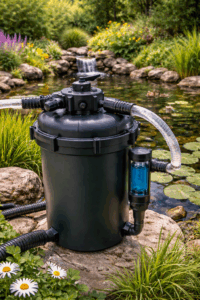
Before exploring pond filtration systems, it is essential to understand one critical principle. Pond filtration is not primarily about removing visible debris, but about keeping fish healthy through biological water purification. A pond biofilter is responsible for preventing toxic substances from building up in the water, which can otherwise be deadly to fish. Misunderstanding this has caused many pond owners to invest in unsuitable systems that fail to protect fish health.
Understanding the Pond Biofilter and Its Purpose
Many pond keepers assume pond filtration works like a swimming pool filter, but this is incorrect. Pool filters are designed to trap solid particles, while pond systems focus on biological processes. The role of a pond biofilter is to support beneficial bacteria that neutralize dissolved toxins such as ammonia and nitrites. Any solid removal is secondary and not the main function of the system.
Filtration vs Biological Purification in Fish Ponds
Fish waste naturally produces ammonia and nitrites, which are extremely harmful even at low levels. These toxins remain dissolved in the water and cannot be removed by mechanical filtration alone. A properly designed pond biofilter provides a large surface area where beneficial bacteria can grow and convert these harmful compounds into safer nitrates. While settled solids do not harm fish, chemical imbalances can quickly become fatal.
How Biofiltration Works in Natural Pond Environments
In nature, ponds and rivers rely on rocks, submerged wood, and debris as natural biofilters. Bacteria colonize these surfaces and continuously purify the water. A man-made pond biofilter mimics this natural process by concentrating bacterial activity in a controlled environment, allowing ponds to safely support higher fish populations.
Simple Biofilters for Most Garden Ponds
The majority of garden ponds do not require complex or costly systems. Simple box or cylindrical biofilters containing high-surface-area media such as Alfa grog are usually sufficient. These systems are easy to install, low maintenance, and highly effective. A correctly sized pond biofilter, paired with UV clarification, will meet the needs of most home ponds.
Advanced Filtration Systems for Larger and Koi Ponds
Larger ponds, particularly koi ponds over 5,000 liters, may benefit from advanced pressure-based systems such as bubble bead filters. These combine mechanical and biological filtration in a compact, efficient design. However, they are unnecessary for smaller ponds and should only be used when pond size and fish stocking levels demand it. Selecting the correct pond biofilter always depends on pond volume, fish load, and long-term maintenance goals.