
Why You Need a Pond Biofilter and How It Works 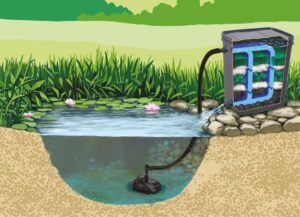
A pond biofilter is essential for maintaining clean, healthy water and protecting your fish. Fish naturally pollute pond water through their metabolic processes, releasing nitrogen-based waste such as ammonia. If these toxins are not removed, they can quickly build up to dangerous levels and threaten fish health. A properly functioning pond biofilter neutralises these harmful substances while also helping to remove suspended solids that cloud the water.
For small to medium-sized ponds that are lightly stocked or do not contain high-value fish, there is no need to overspend on complex filtration systems with unnecessary features. The effectiveness of a pond biofilter is not determined by price, branding, or extra components, but by correct sizing and biological efficiency.
Pond owners typically choose between two main types of filters: gravity-fed (box-style) filters and pressurised filters. Both options can perform well when installed correctly. The most important element in either system is the biomedia housed inside the filter.
Biomedia provides a large surface area for beneficial bacteria to colonise. These bacteria convert toxic ammonia and nitrite into far less harmful nitrate through the biological filtration process. Without sufficient biomedia, even the most expensive pond biofilter will struggle to maintain water quality.
Choosing the right pond biofilter ensures stable water conditions, healthier fish, reduced maintenance, and a clearer pond overall.
Types of Biofilters Suitable for Ponds and Water Features
There are three main types of pond biofilters suitable for use in ponds, water features, and even swimming pools adapted for biological filtration. Choosing the correct biofilter depends on pond size, fish load, and filtration requirements.
The three most common types of biofilters are:
-
Gravity Flow Biofilters
-
Pressurised Biofilters
-
Bubble Bead Biofilters
Each type of pond biofilter serves the same biological purpose but differs in design, installation, and water flow method.
Gravity Flow Biofilters
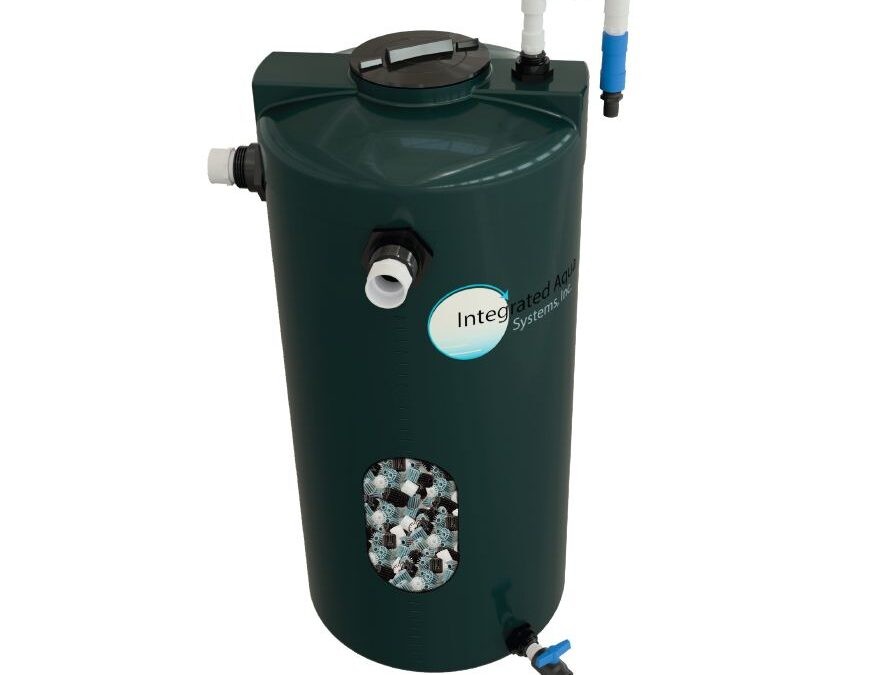
Gravity flow biofilters are a cost-effective and reliable filtration solution suitable for ponds of all sizes. These filters operate without internal pressure, allowing water to flow naturally through the system. Because of their simple design, gravity flow biofilters are widely used in koi ponds, ornamental ponds, and larger water features.
These biofilters can be supplied with different types of biomedia, depending on filtration needs:
-
Bio Balls – 40 mm plastic media specifically designed for low-pressure biofilter systems. They provide a good surface area for beneficial bacteria while allowing free water flow.
-
Alfagrog – A high-efficiency ceramic biomedia developed in the United Kingdom for the fish farming industry. Alfagrog offers an exceptionally large surface area, allowing more beneficial bacteria to grow and improving biological filtration performance.
When correctly sized and installed, gravity flow biofilters provide stable water quality, effective toxin removal, and long-term reliability, making them a popular choice for pond owners seeking dependable biological filtration.
Understanding Pond Biofilters and How to Choose the Right System
Choosing the correct pond biofilter is essential for maintaining clean water, healthy fish, and long-term pond stability. Different filter types are designed for different pond sizes, fish loads, and maintenance preferences.
Alfagrog Biomedia: High-Efficiency Biological Filtration
Alfagrog is a sintered ceramic biomedia that is extremely hard, highly porous, and does not break down over time. Its porous structure provides an exceptional surface area for beneficial bacteria while allowing excellent water flow. These biofilter units can be installed in parallel, making them suitable for ponds of any size.
With rising electricity costs, pond owners using traditional sand filters should seriously consider switching to Alfagrog-based biofilters. This change can reduce pump energy requirements and save thousands of rands over the lifetime of a pond.
Pressurised Biofilters
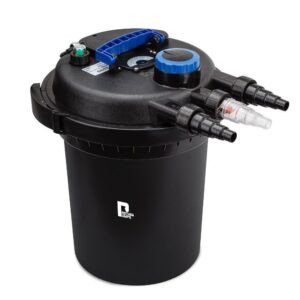 Pressurised biofilters are compact systems that can be installed discreetly or positioned some distance away from the pond. Cleaning is straightforward using built-in spray nozzles, making maintenance quick and convenient.
Because water must be forced through the system, pressurised biofilters require a pump with sufficient head pressure. These filters are commonly sold as combination units that include an Ultra Violet Clarifier (UVC), ensuring clearer water and easier installation.
When selecting a pump, it is always advisable to follow manufacturer recommendations and choose a slightly larger pump if in doubt. Correct specification principles apply to all types of pond biofilters.
Bubble Bead Biofilters
Bubble Bead biofilters are advanced pressurised systems designed primarily for large ponds, typically up to 100,000 liters. They are not intended for average garden ponds but are widely used in large koi ponds and commercial fish systems.
This pond biofilter functions as both a mechanical and biological filter. The bead media is kept in constant motion through aeration, allowing bacteria to receive a continuous supply of ammonia and nitrites. This agitation dramatically increases filtration efficiency while using a relatively small volume of biomedia.
Bubble Bead filters operate in a closed, pressurised environment and offer a compact, low-maintenance filtration solution. The integrated blower improves oxygen levels and assists with backwashing debris from the bead surfaces. Efficiency can be further enhanced by using biological boosters such as Alfagrog.
Advantages of Bubble Bead Biofilters include:
-
Compact design with high filtration capacity
-
Low maintenance requirements
-
Highly efficient ammonia and nitrite removal
-
Effective mechanical solids filtration
Correct Biofilter Selection Starts With Pond Volume
Accurately estimating pond volume—within about 80% accuracy—is critical when selecting a pond biofilter. Filters are rated based on water volume, fish stocking density, and feeding levels. Heavily stocked ponds require larger filtration capacity.
Always consider choosing a slightly oversized filter for improved performance and water stability. It is important to note that a biofilter alone will not clear green water caused by suspended algae. An Ultra Violet Clarifier (UVC) is required for algae control, and many modern biofilters include built-in UVC units for convenience.